
Hiking Southern Utah With Dogs: Heat, Water, Wildlife, and What to Pack
Southern Utah's red rock is hard on paws. Here's how local hosts keep dogs safe on desert trails, from heat and water to rattlesnakes, foxtails and the nearest 24-hour vet.


In this guide
Hiking Southern Utah with dogs is very doable if you plan around the heat. Hike early, carry plenty of water and a bowl, test the ground with the back of your hand, and keep your dog leashed and on the trail for rattlesnakes and fragile desert soil. Before you set out, save the number of the area’s 24-hour emergency vet in St. George.
We host a lot of dogs at our pet-friendly cabins in Apple Valley, and the desert surprises many of them. A trail that feels fine to you in sneakers can burn a dog’s paws by 10 a.m. This guide covers the practical side of desert hiking with a dog. For where to go, see our list of dog-friendly hikes near Zion.
When to hike with your dog in Southern Utah
Timing is the single biggest safety decision you’ll make. Here are the average highs for the area, from NOAA’s 1991–2020 climate normals. Apple Valley sits about 1,700 feet higher than Hurricane, so it usually runs a few degrees cooler.
| Months | Average highs (Hurricane area / St. George) | Hiking with a dog |
|---|---|---|
| December–February | About 51–59°F | Any time of day; watch for icy, shaded spots |
| March–April | About 66–75°F | Great conditions; rock can warm up by early afternoon |
| May | About 83–85°F | Early morning or evening only |
| June–August | About 94–102°F | Short outings at sunrise or after sunset only |
| September | About 89–92°F | Early morning; still summer-hot by midday |
| October–November | About 62–79°F | Great conditions again |
From July through September, monsoon storms can also cause flash floods. Stay out of narrow canyons and dry washes when storms are in the forecast, even if the sky overhead is clear.
Heat and hot surfaces
Air temperature only tells part of the story. Dark pavement and sun-baked rock get much hotter than the air: on a 77°F day, asphalt can reach around 125°F. Red slickrock and sand heat up too, and there’s rarely shade on desert trails.
The National Park Service’s B.A.R.K. Ranger advice is simple: “Hot to touch? Too hot for paws!” Use the five-second test before you start and again as the day warms up:
- Place the back of your hand flat on the pavement, rock or sand.
- Hold it there for five seconds.
- If you can’t, the surface is too hot for your dog. Turn back, find shade or wait until evening.
Dog booties can help on hot or rough rock, but practice with them at home first. A dog wearing them for the first time on a trail tends to spend more time shaking its feet than walking.
Know the signs of heatstroke
Dogs overheat faster than people, especially flat-faced breeds, older dogs and dogs with thick coats. Watch for:
- Heavy panting and drooling
- Restlessness or unsteadiness
- Unusual gum or tongue color
- Lethargy or collapse
If you see these signs, stop. Move your dog into shade, cool it with wet towels at room temperature, and get to a vet right away. Never leave a dog in a parked car here, even for a few minutes.
Water: bring more than you think
There are almost no reliable water sources on desert trails, and the ones you find aren’t safe for dogs. Pack water for your dog separately from your own, plus a collapsible bowl, and offer it often rather than waiting until your dog looks thirsty.
Don’t let your dog drink from standing water, potholes or ponds. In Zion, the park asks owners to keep dogs out of the Virgin River entirely because of toxic cyanobacteria. Our guide to Zion’s pet rules explains where else dogs can and can’t go in the park.
Rattlesnakes and other wildlife
Washington County is home to several rattlesnake species, and the Great Basin rattlesnake and the sidewinder are the most common. Snakes are most active in the warmer months, and they like to rest in the shade of rocks and shrubs, which is exactly where a curious dog puts its nose.
A few habits lower the risk:
- Keep your dog leashed. A 6-foot leash keeps your dog on the trail and gives you control if you spot a snake.
- Stay on open trail. Avoid letting your dog dig under ledges or push into brush.
- Listen. If you hear a rattle, stop, find the snake and back away slowly the way you came.
- Consider aversion training before your trip if you hike in snake country often. Ask your vet about it.
If your dog is bitten, keep it as calm and still as you can and go straight to a vet. The leash also protects deer, rabbits and lizards.
Cheatgrass, foxtails and cactus
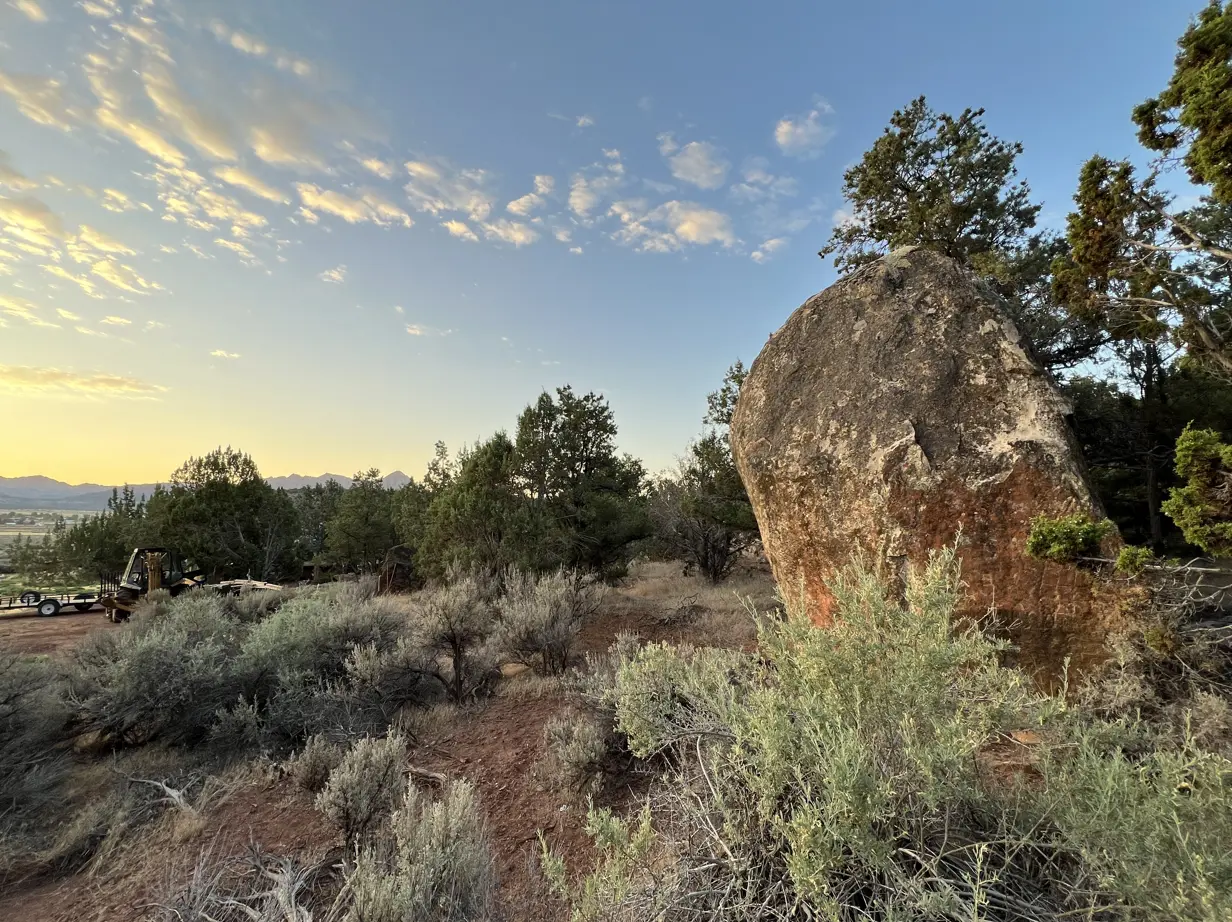
In late spring and summer, cheatgrass and foxtail seeds dry out into sharp, barbed awns that work their way into ears, noses, eyes and between toes. They can cause infections if they’re not found.
After every hike, check your dog’s paws, armpits, ears and face. Watch for head shaking, pawing at an ear, sudden sneezing or limping, and see a vet if they don’t stop. While you’re checking, look for cactus spines too. A small pair of tweezers or a comb handles most of them.
Desert trail etiquette
A little care keeps trails open to dogs.
- Stay off the crust. The dark, bumpy soil between plants is biological soil crust, a living layer that holds the desert together. One footstep can kill it, and it takes decades to recover. Keep your dog on the trail, on bare rock or in sandy washes.
- Bag it and carry it out. Waste breaks down slowly in a dry climate.
- Share the trail. On BLM trails like Gooseberry Mesa and the Hurricane Cliffs, you’ll meet mountain bikers. Step aside with your dog close.
- Follow local rules. State parks and national parks have their own leash rules, and some popular hikes don’t allow dogs at all.
Emergency vets near Zion
Save these numbers before you hike. Cell coverage can be patchy in canyons and on remote roads.
| Clinic | Location | Phone | Notes |
|---|---|---|---|
| Southwest Animal Emergency Clinic | 1067 E Tabernacle St, St. George | 435-673-3191 | Open 24/7, including holidays; no appointment needed |
| Zion Veterinary Hospital | Hurricane | 435-635-4033 | General small-animal practice; call during business hours |
St. George is about 45 minutes from our cabins in Apple Valley.
Packing list for hiking with your dog
- Water for your dog in its own bottle or bladder, plus a collapsible bowl
- A 6-foot leash (state parks and national parks require 6 feet or less)
- Waste bags, and a bag to carry them out
- Booties, if your dog is used to them
- A cooling vest or bandana you can wet down
- A small first-aid kit with tweezers, gauze, vet wrap and a comb for awns
- Your dog’s ID tag and a copy of its vaccine records on your phone
- A towel for wiping down paws and for wet-towel cooling
- Snacks for both of you
- The emergency vet’s number, saved before you lose signal
Our take
The desert rewards dogs and owners who start early and quit before the heat. Plan your dog’s hikes for cool mornings, test the ground, carry plenty of water and check for awns afterward. On hot afternoons, a nap in an air-conditioned cabin beats any trail. When you want to hike Zion’s dog-free trails, a day of dog daycare near Zion is the way to go. Our pet-friendly cabins charge a flat $29 pet fee per stay; dogs stay leashed outdoors, are never left unattended and stay out of the hot tubs. Check each cabin’s page in our cabin lineup for its pet limit, and book your stay direct.
Frequently asked questions
Is it safe to hike with a dog in Southern Utah in summer?
How can I tell if the ground is too hot for my dog?
What are the signs of heatstroke in a dog?
Are there rattlesnakes in Southern Utah?
Where is the nearest emergency vet to Zion National Park?

About the authors
This guide comes from the team at Anasazi Cliffs Lodging, four private desert cabins in Apple Valley, Utah, run by local hosts Robert and Maria. We help guests plan Zion, Gooseberry Mesa and Southern Utah days every week, and we update these guides when rules and conditions change.


