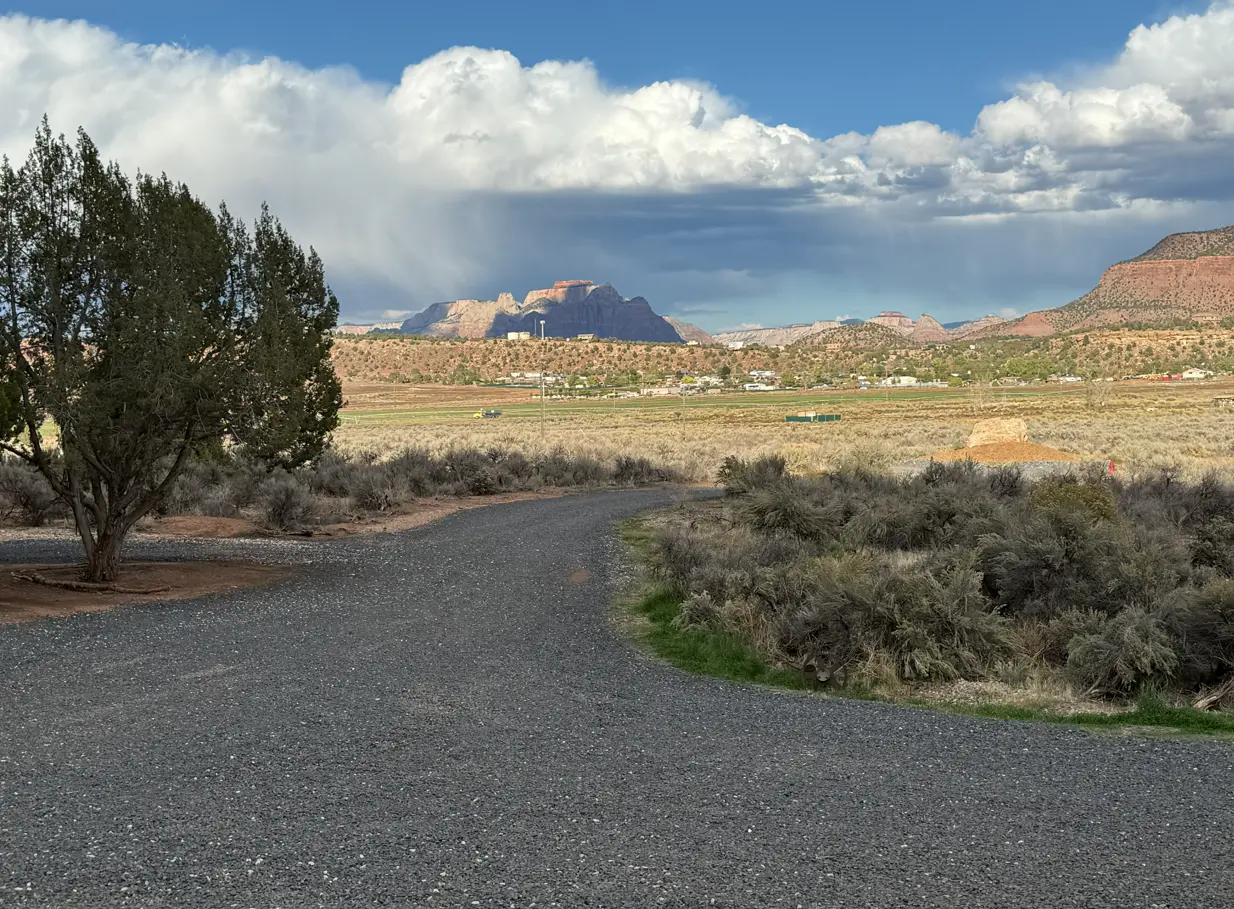
Gooseberry Mesa Camping vs. Staying in a Cabin: How to Choose Your Ride Base
Camping on Gooseberry Mesa puts you at the trailhead for free, but you haul every drop of water. A cabin nearby adds showers, a kitchen and a hot tub. Here's how to choose.


In this guide
Gooseberry Mesa camping is free, dispersed camping on BLM land, with no water, no trash service and a rough dirt road to reach it. It suits self-sufficient riders with a capable vehicle and mild weather. If you’d rather have a shower, a kitchen and a hot tub after a long slickrock day, a cabin in Apple Valley puts you about 25 to 30 minutes from the trailheads.
We host a lot of riders, so we hear about both sides. Plenty of our guests have camped on the mesa on earlier trips and booked a cabin this time, and some do the reverse. Neither is the “right” way to ride Gooseberry. This guide lays out what camping on the mesa really involves, where a cabin earns its keep, and how to decide. For more rides in the area, browse our two-wheel experiences near Zion.
What Gooseberry Mesa camping involves
Gooseberry Mesa is a National Recreation Trail on public land managed by the BLM’s St. George Field Office. The mesa top sits around 5,200 feet, and the camping is dispersed: no campground, no host, no hookups. You pick a spot and you’re responsible for everything.
The ground rules, from the BLM’s Gooseberry Mesa page:
- Use existing sites. Camp only where there’s clear evidence of previous use. Don’t create new clearings or drive off designated routes.
- Stay half a mile from the byway. No camping within 1/2 mile of the Smithsonian Butte Byway on federal land.
- 14-day limit. You can stay up to 14 days within any 28-day period.
- No water. Not at camp, not at the trailheads.
- No trash service. Pack out everything, including food scraps.
- Fires are discouraged. Campfires are permitted, but the BLM discourages them, and restrictions can apply at any time.
- Mixed land ownership. BLM, state and private parcels sit side by side here. Stay on designated roads and respect signs.
There are no fees or reservations for individual campers. Permits are only needed for commercial or organized group events.
What you’ll need to bring
Self-sufficient really means self-sufficient. Plan for all of your drinking, cooking and cleanup water (a gallon per person per day is a common starting point, and more in warm weather), a way to pack out all trash, a plan for human waste (a portable toilet or waste bags), shade, a stove that doesn’t depend on a fire, and a spare tire you trust. Facilities at the trailheads are minimal, so don’t count on restrooms.
The road in
Every Gooseberry Mesa camping plan starts with the access road. From UT-59 near Apple Valley, you turn onto the Smithsonian Butte Byway, then onto the Gooseberry road for several miles of dirt to the trailheads. The BLM’s map warns that the road “frequently experiences rutting and washing out” and recommends high-clearance or 4WD vehicles.
Two things matter for campers. First, a long trailer or a low-slung van can struggle with the ruts. Second, the road can become impassable during or shortly after wet weather, because the dirt turns to slick, sticky mud. If a storm rolls through while you’re camped up top, you may be waiting it out. Our full guide to Gooseberry Mesa road conditions and access has turn-by-turn directions and what to do after rain.
Heat, wind and weather on the mesa
The mesa is high desert, exposed, and nearly treeless at the rim. That’s why the views are so good, and it’s also why camping there can be hard work.
- Summer heat. Nearby La Verkin averages highs in the upper 90s in July. The mesa runs cooler than the valley floor but there’s almost no shade, and slickrock throws heat back at you all afternoon.
- Wind. Nothing breaks the wind on top of an open mesa. Stake tents well and expect a gusty afternoon now and then, especially in spring.
- Cold nights. Desert temperatures can swing more than 30°F between day and night. Spring and fall nights can drop near freezing.
- Storms. Summer thunderstorms bring lightning to an exposed mesa top, and wet slickrock is slick. Wet dirt roads are worse.
In spring and fall, with a good forecast, camping up there can be magical: sunset on the South Rim, then a sky full of stars. In July and August, most riders are better off sleeping lower and somewhere they can cool off.

Staying in a cabin near Gooseberry Mesa
Our cabins are in Apple Valley, along UT-59, about 25 to 30 minutes from the Gooseberry trailheads. That’s close enough to ride at sunrise or sunset, and far enough that you’re sleeping in a bed with a roof that doesn’t flap.
What a cabin adds after a day on the slickrock:
- Showers and real beds. Rinse off the red dust before dinner.
- A kitchen (or kitchenette in the studio cabin). Cook a proper meal, stock a fridge, and make coffee before an early start. Groceries are in Hurricane, about 17 minutes away.
- A hot tub. The Anasazi Cabin has its own private hot tub, and the other three cabins have use of a shared one. Sore legs appreciate it.
- Fast Wi-Fi. Check radar, BLM notices and road conditions before you commit to the dirt road.
- A fire pit with free firewood, so you still get a campfire evening without worrying about mesa fire restrictions.
A few honest limits: there’s no bike storage, wash station or repair stand at the lodge, so bring a good lock and your own tools. We don’t run shuttles either. The Zion Ranger Cabin has trailer and overflow parking, which helps if you’re towing toys or traveling with two vehicles.

Gooseberry Mesa camping vs. a cabin: side by side
| Camping on the mesa | Cabin in Apple Valley | |
|---|---|---|
| Cost | Free | Nightly rate; 2-night minimum on most dates |
| Distance to trailheads | At or near the trailhead | About 25–30 minutes |
| Water | Bring all of it | Running water, showers |
| Trash and toilets | Pack it all out | Handled |
| Weather exposure | Full sun, wind, storms | Indoors, with a hot tub to recover in |
| Wet-road risk | Can be stuck until the road dries | Paved highway; final stretch is maintained gravel |
| Fires | Discouraged; restrictions possible | Private fire pit with free firewood |
| Connectivity | Cell coverage varies | Fiber Wi-Fi; AT&T and T-Mobile generally work |
| Best for | Self-sufficient riders in mild weather | Groups, families, hot or wet weeks, longer trips |
Other options on and near the mesa
Gooseberry Yurts is a private business with yurts on the north side of the mesa, about 7 miles in on dirt. It’s a middle ground between a tent and a cabin, without running water, electricity or air conditioning, and it closes in July and August. Check with them directly for details.
Hurricane Cliffs Trail System campsites. If your trip leans toward JEM and the Hurricane Rim, the BLM has 56 numbered dispersed campsites with fire rings in that system, closer to Hurricane. Camping elsewhere there isn’t allowed, the 14-day limit applies, and there’s no water.
How to choose your ride base
Camp on Gooseberry Mesa if:
- You have a high-clearance vehicle, a solid water plan and gear you trust in the wind.
- The forecast is dry and mild, usually spring or fall.
- Waking up a short pedal from the trails matters more to you than comfort.
Stay in a cabin if:
- You’re riding in summer heat, or rain is in the forecast.
- Your group includes non-riders or kids who want a beach day at Sand Hollow or a Zion day.
- You’re staying four or more nights and want to recover between big rides.
- You want to ride more than one area. Little Creek Mesa, Wire Mesa, JEM and the Hurricane Rim are all within easy reach, and our trail comparison helps you plan the week.
Plenty of riders do both: a couple of nights camped on the mesa, then a cabin for a hot shower and a soak before the drive home.
Our take
If you love dispersed camping and the weather cooperates, camping on Gooseberry is one of the great ways to experience the mesa. Respect the rules, pack it all out and keep an eye on the sky. If you’d rather ride hard and come home to a hot shower, a cooked meal and a hot tub under a dark sky, our cabins in Apple Valley make an easy base. Check live availability and book direct.
Frequently asked questions
Can you camp on Gooseberry Mesa?
Is there water on Gooseberry Mesa?
Are campfires allowed on Gooseberry Mesa?
Do I need 4WD to camp on Gooseberry Mesa?
How far is Apple Valley from Gooseberry Mesa?

About the authors
This guide comes from the team at Anasazi Cliffs Lodging, four private desert cabins in Apple Valley, Utah, run by local hosts Robert and Maria. We help guests plan Zion, Gooseberry Mesa and Southern Utah days every week, and we update these guides when rules and conditions change.