Best Time to Mountain Bike Gooseberry Mesa and Hurricane, Utah: A Month-by-Month Guide
Spring and fall are prime time on Gooseberry Mesa and the Hurricane trails, winter is a quiet bonus season, and summer is for dawn rides only. Here's what each month is really like.

In this guide
The best time to mountain bike Gooseberry Mesa and the Hurricane trails is spring (March through May) and fall (late September through November), when average highs sit mostly in the 60s and 70s. Winter is a surprisingly good bonus season on dry days. Summer works only at first light, because July highs in the Hurricane area average close to 100°F.
We live with this weather year-round at our cabins in Apple Valley, and riders ask us about timing more than anything else. Below is a month-by-month look at conditions, how the mesas differ from town, and how to handle heat, cold and mud. For the trails themselves, browse our On Two Wheels collection.
Month-by-month temperatures
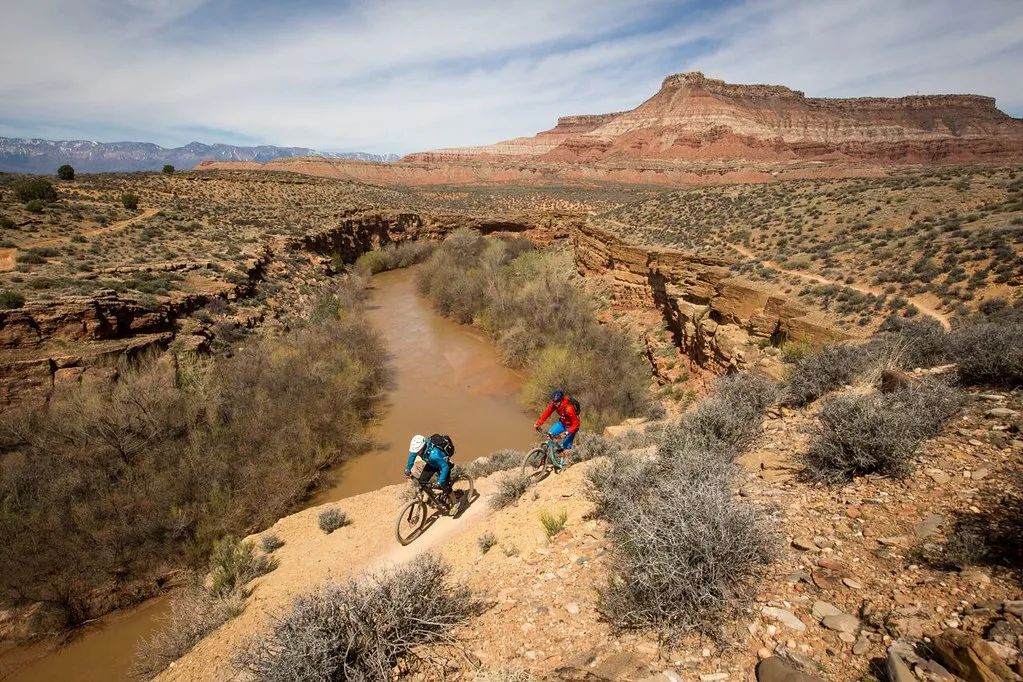
These are NOAA 1991–2020 average highs and lows for La Verkin, next door to Hurricane at about 3,200 feet. Hurricane’s trails, like the JEM Trail and the Hurricane Rim, sit at roughly this elevation.
| Month | Avg high / low (°F) | Riding conditions |
|---|---|---|
| January | 52 / 29 | Cold mornings; ride midday on dry, sunny days |
| February | 57 / 33 | Warming; watch for mud after storms |
| March | 66 / 40 | Prime season begins; busiest time on the trails |
| April | 73 / 44 | Prime; often the best month of the year |
| May | 83 / 52 | Good early; getting hot by afternoon |
| June | 94 / 61 | Dawn rides only |
| July | 98 / 68 | Hottest month; dawn rides, monsoon storms possible |
| August | 96 / 67 | Hot; monsoon storms possible |
| September | 89 / 59 | Still hot early; cooling later in the month |
| October | 76 / 47 | Prime; a favorite for many riders |
| November | 62 / 35 | Very good; short days, cool mornings |
| December | 51 / 28 | Quiet; ride midday on dry days |
Up on the mesas, subtract a few degrees. Apple Valley sits at about 4,960 feet and Gooseberry Mesa at about 5,200 feet, roughly 1,700 to 2,000 feet above Hurricane. Expect the mesa tops and our cabins to run a few degrees cooler than the numbers above. That’s a gift in May and September and a reason to pack a warmer layer from November through March.
Day-to-night swings are big, too. The National Park Service notes that temperatures in the Zion area can change by more than 30°F between day and night, so a 40°F start can turn into a 70°F ride.
Spring (March to May): prime time, and busy
Spring is when the area wakes up. Highs climb from the mid-60s in March to the low 80s by late May, the desert greens up a little, and the slickrock grips like sandpaper.
It’s also the busiest stretch of the year. The Hurricane Mountain Bike Festival is held each spring at Quail Creek State Park (the 2026 edition ran March 27–28), spring break traffic fills the trailheads, and rental shops book up. If you’re coming in March or April, reserve your bike and your lodging early. Our bike rental guide covers what to book ahead.
Spring is also when you’ll most likely hit a wet week. Storms can roll through into April, and that brings us to the most important rule in this guide.
Mud: when not to ride
The BLM calls the trails here moisture-sensitive. When the red dirt around Hurricane and Apple Valley gets wet, it turns into sticky peanut butter that packs your tires and frame and leaves deep ruts. Those ruts harden when the trail dries and stay for months, and everyone who rides after you pays for them.
Our rules of thumb:
- If your tires are leaving ruts, turn around. Visit Utah asks riders to skip extremely muddy trails, because riding mud damages them.
- Wet slickrock is slick. Dry sandstone is grippy; wet sandstone is not. Wait until it’s fully dry.
- Watch the access roads. The BLM warns that dirt roads off UT-59, including the roads to Gooseberry Mesa, may be impassable when wet. Getting stuck halfway up the mesa road is a bad way to end a day.
- Give it time. After a soaking rain, give the dirt a day or two of sun before riding. Sandy trails dry faster than clay; north-facing and shaded sections hold moisture longest.
- Have a backup. On a questionable day, ask the shop staff in Hurricane what’s riding well. They hear from riders every day.
Summer (June to August): dawn patrol only
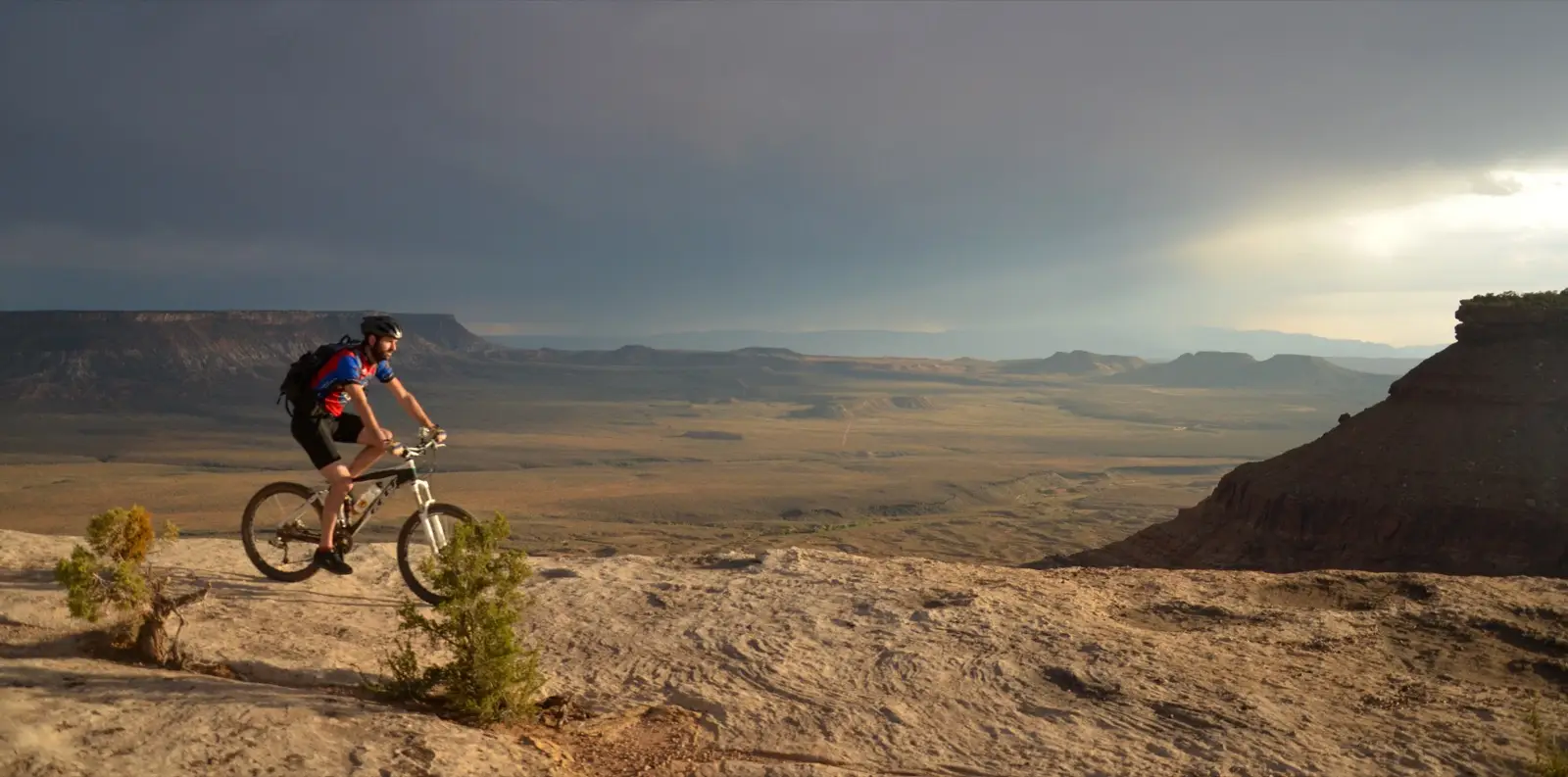
Summer riding here is possible, but it’s a different sport. Average highs in the Hurricane area are in the mid- to upper 90s from June through August, and Visit Utah notes daytime temperatures in mid-July average over 100°F. There’s almost no shade on the mesas and no water anywhere on the trail.
How riders make it work:
- Start at first light. Be rolling as soon as you can see, and plan to be off the slickrock by mid- to late morning.
- Pick shorter, lower-effort rides. A loop of Wire Mesa or a lap on JEM is a better summer choice than the Hurricane Rim Loop or the Gooseberry Big Loop.
- Carry more water than you think you need, plus electrolytes. A hydration pack is standard equipment here.
- Watch the sky. Monsoon season runs roughly July through September. Afternoon thunderstorms bring lightning to exposed mesa tops and can turn trails and dirt roads to mud fast.
- Know the signs of heat illness in yourself and your group: dizziness, headache, nausea or confusion means stop, find shade and cool down.
Being up at about 5,000 feet helps a little. Mornings in Apple Valley are cooler than in Hurricane, which makes it easier to get out the door early.
Fall (September to November): the other prime season
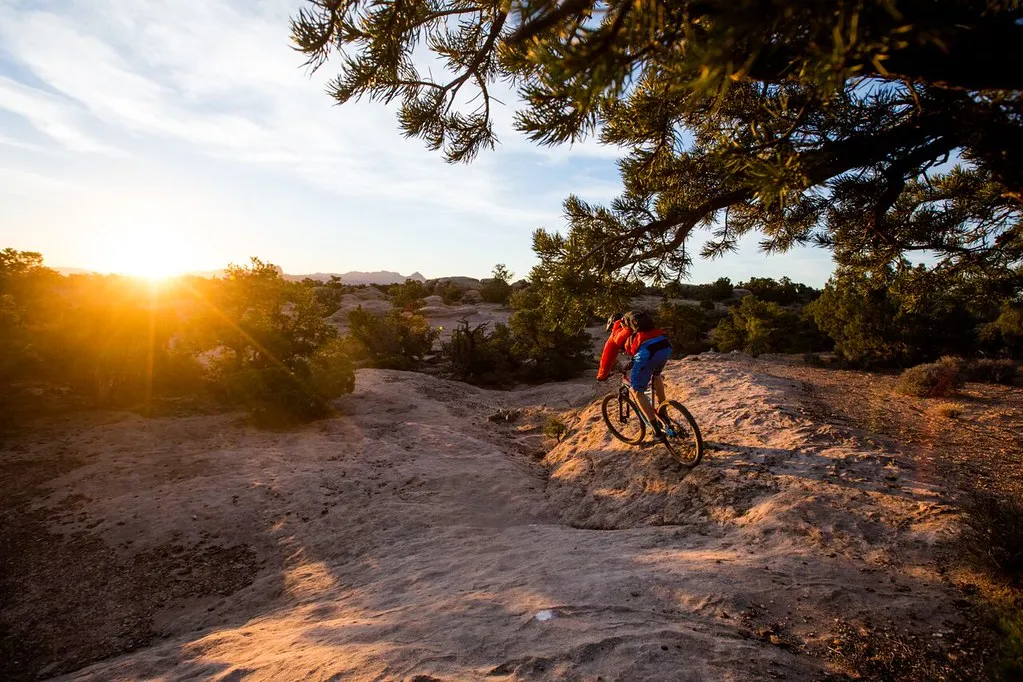
Fall is spring’s equal, and some locals would say it’s better. September starts hot, with highs near 90°F in town, but by the end of the month mornings are crisp. October averages 76°F in Hurricane and a few degrees cooler on Gooseberry, and the light on the slickrock in late afternoon is hard to beat.
Red Bull Rampage, the freeride event, is held in October in the hills near Virgin (in 2026, October 8–10). It draws a crowd to the area, so if your trip overlaps, book lodging and rentals early. Check the event’s dates each year.
November is underrated. Highs drop into the low 60s, the trails are quieter, and the days are short, so plan rides to finish well before dark. Pack a warm layer for the descent and for the drive home.
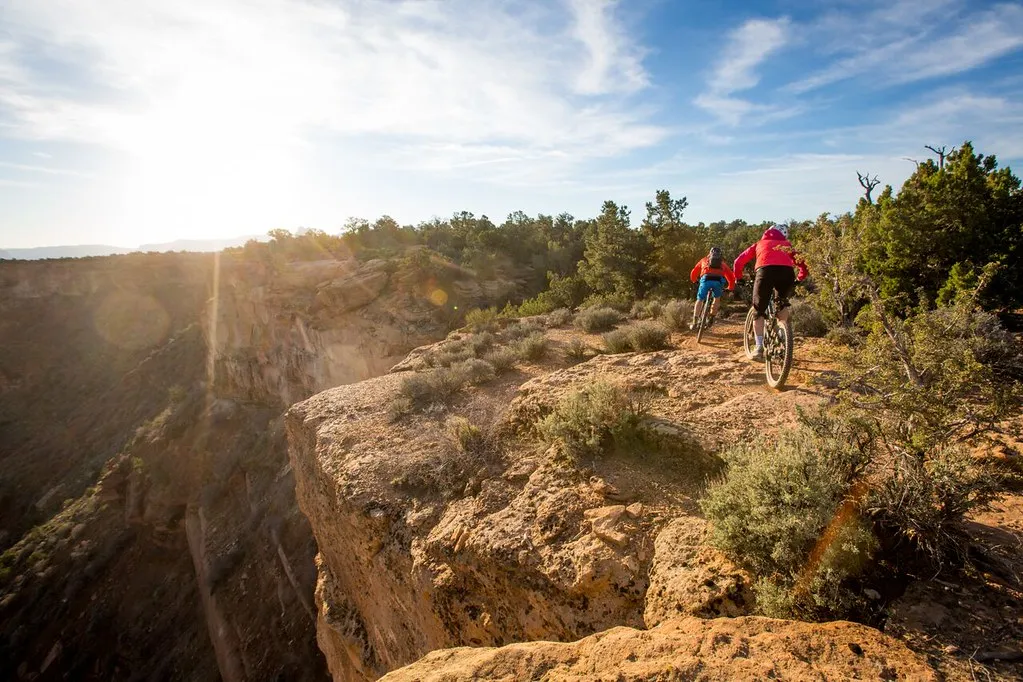
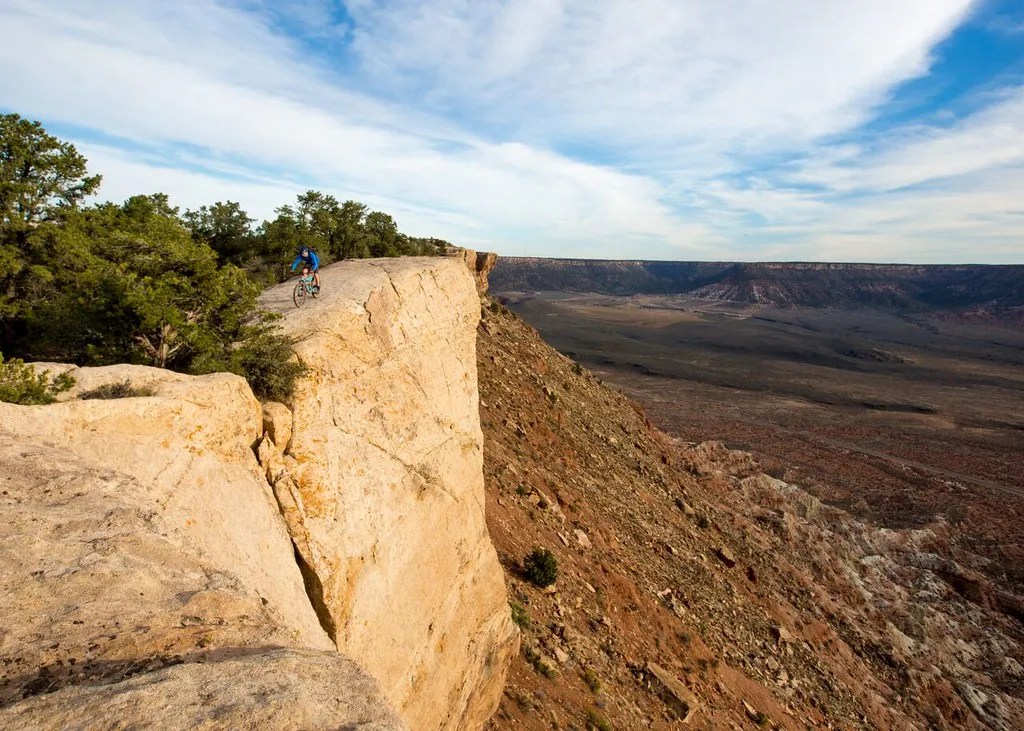
Fall is also the best time for the technical, full-day rides: the Gooseberry Big Loop, Little Creek Mesa and the Hurricane Rim Loop. Cool temperatures mean you can carry less water weight and stay out longer.
Winter (December to February): the quiet season
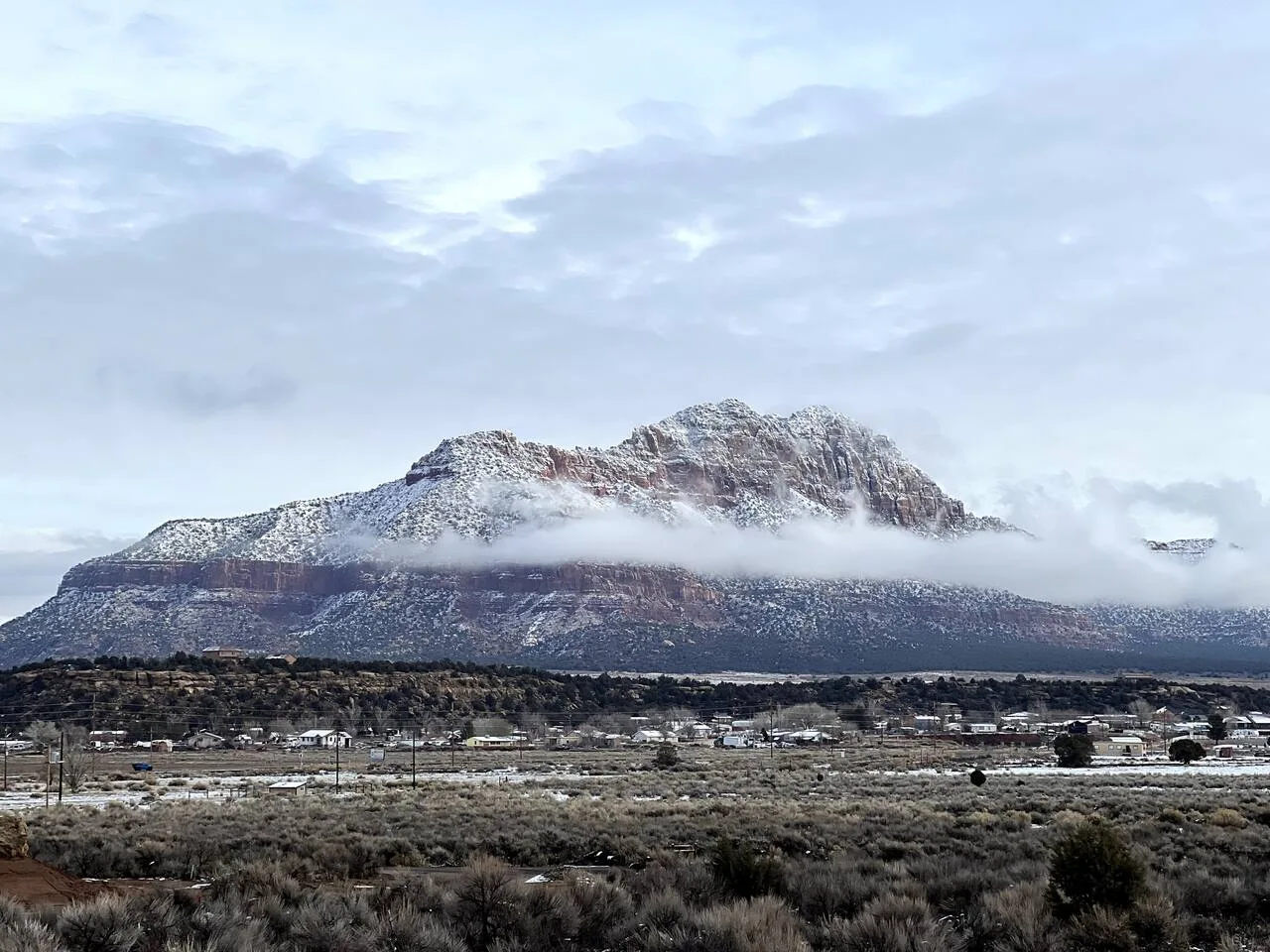
Winter surprises people. Highs in Hurricane average in the low 50s from December through January, climbing into the upper 50s in February. BLM keeps Gooseberry Mesa and the Hurricane trails open all year, and Visit Utah notes that area trails rarely hold snow or ice for long.
The catch is the cold mornings and the elevation. Lows average in the high 20s and low 30s, and Gooseberry is a few degrees colder than town. After a storm, snow and wet ground can linger on the mesa top longer than on JEM, which sits lower, near the river. Little Creek Mesa’s cairn-and-dot navigation gets harder when snow covers the route.
Winter riding tips:
- Start mid-morning and ride through the warmest part of the day.
- Choose lower trails like JEM after a cold snap, and save Gooseberry for a sunny stretch.
- Layer up with gloves, a wind shell and something warm for your ears.
- Treat snowmelt like rain. Thawing ground is muddy ground.
Winter is also when the hot tub at your cabin feels best. After a cold ride, a soak by the fire pit is a fine way to spend the evening.
Choosing your dates
If you can pick any time, aim for mid-April or mid-October. If you need to avoid crowds, look at early November, late February or early March and keep your plans flexible around the weather. If summer is your only option, plan short dawn rides and use the afternoons for rest.
For the full Gooseberry experience, take a look at the Gooseberry Mesa White Trail and our Mountain Biker’s Pilgrimage itinerary. BLM’s Gooseberry Mesa National Recreation Trail page has current notices. Whatever the season, our desert mountain bike packing list covers the layers and water you’ll need, and if you’re flying in, see our guide to traveling with a mountain bike to Southern Utah.
Our cabins in Apple Valley are about 25 to 30 minutes from the main Gooseberry trailhead and about 17 minutes from Hurricane. When you’ve picked your month, see open dates and book direct.
Frequently asked questions
What is the best month to mountain bike Gooseberry Mesa?
Can you mountain bike in Hurricane, Utah in the summer?
Can you mountain bike Gooseberry Mesa in winter?
Is it OK to ride Gooseberry Mesa or JEM when it's muddy?
When is the Hurricane Mountain Bike Festival?
About the authors
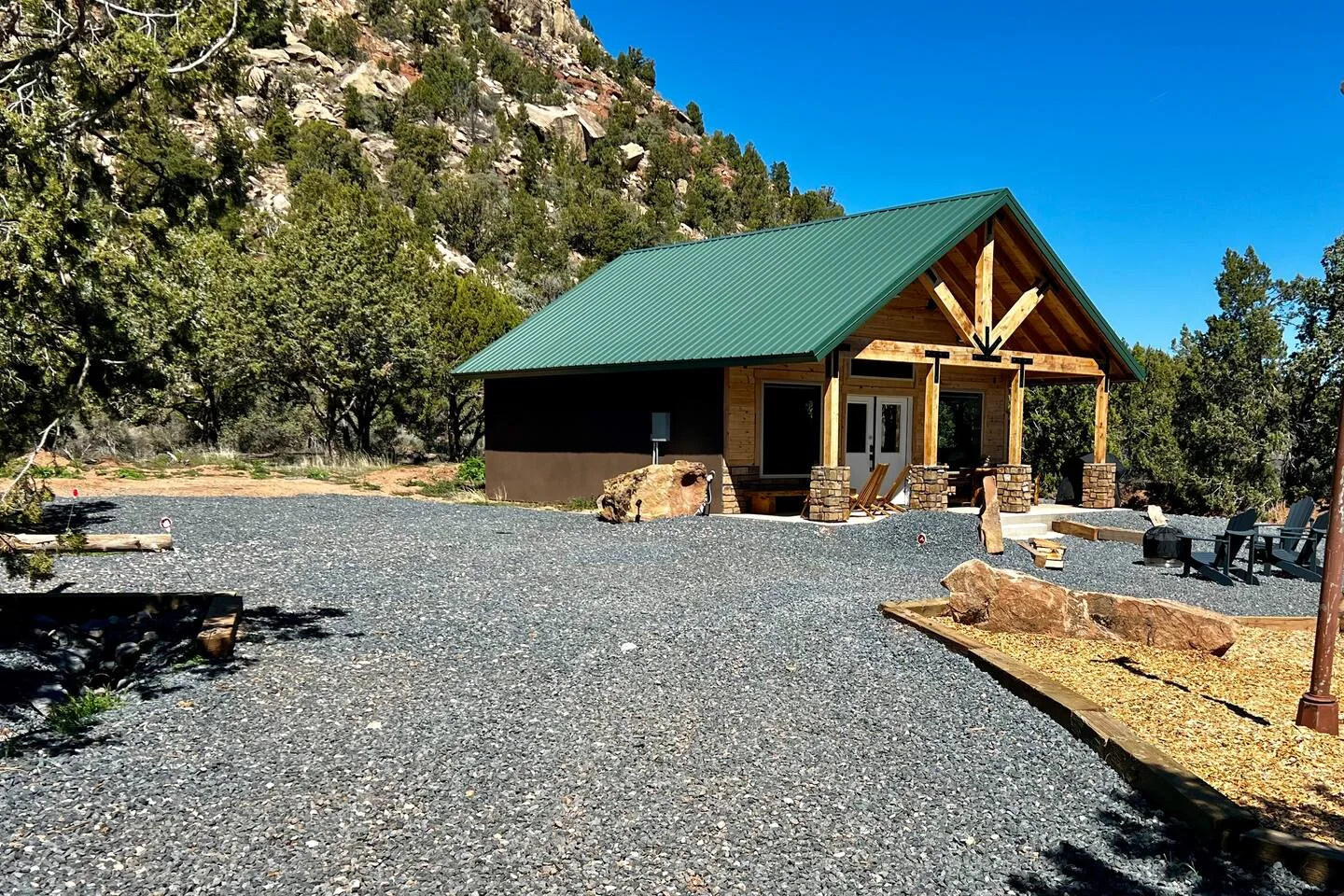
This guide comes from the team at Anasazi Cliffs Lodging, four private desert cabins in Apple Valley, Utah, run by local hosts Robert and Maria. We help guests plan Zion, Gooseberry Mesa and Southern Utah days every week, and we update these guides when rules and conditions change.