Zion National Park in Winter: What to Expect and Why a Hot Tub Cabin Makes Sense
Winter in Zion brings mild afternoons, icy shaded trails and far fewer people. Here's what December through February is really like, which hikes work, and how to end a cold day well.

In this guide
- What Zion in winter is really like
- Icy trails and traction devices
- Shorter days
- The 2026–27 shuttle schedule and winter road access
- What’s great about winter in Zion
- The best winter hikes in Zion
- Pa’rus Trail
- Riverside Walk
- Watchman Trail
- Canyon Overlook Trail
- Cold nights in Apple Valley: an honest note
- Why a hot tub cabin makes sense in winter
- Winter packing list for Zion
- Our take
Zion in winter is quieter, cooler and more relaxed than any other time of year. From December through February, expect daytime highs in the 50s, freezing nights, icy patches on shaded trails and a fraction of the summer crowds. If you pack traction devices and plan around short days, it’s one of the best times to see the park.
We host guests at our cabins near Zion all winter, and the people who come in January tend to be the ones who leave happiest. Here’s what the season is actually like, which hikes are worth doing, and why a hot tub at the end of the day matters more now than in any other month.
What Zion in winter is really like
Winter in Zion is mild by Utah standards, but it’s still winter. NOAA’s 1991–2020 normals for Springdale, at the park’s south entrance, look like this:
| Month | Average high | Average low |
|---|---|---|
| December | 53°F | 29°F |
| January | 54°F | 30°F |
| February | 58°F | 34°F |
Those numbers hide a big daily swing. The National Park Service notes that day and night temperatures can differ by more than 30°F, so a sunny 55-degree afternoon on the Pa’rus Trail can turn into a 28-degree evening in the parking lot. Dress in layers you can add and shed.
Icy trails and traction devices
The biggest winter hazard in Zion isn’t cold. It’s ice. Zion Canyon is deep and narrow, and parts of it get little or no direct sun from December to February. Snowmelt and seeps freeze on shaded sections of trail and can stay frozen for days or weeks.
The park recommends traction devices, and we agree. A pair of microspikes that slips over your hiking shoes weighs almost nothing and turns a slick, nervous walk into a normal one. Bring trekking poles if you have them, and turn around if a section looks like a sheet of ice.
Shorter days
Around the winter solstice, the sun sets around 5:20 p.m. in Springdale, and the canyon floor goes into shadow well before that. Start hikes by late morning, carry a headlamp, and plan the drive back after dark. From Apple Valley that drive is about 50 to 55 minutes on paved highway.
The 2026–27 shuttle schedule and winter road access
This is the part of winter planning that changes most from year to year, so it’s worth getting right.
According to the NPS shuttle page, the Zion Canyon shuttle runs over the holidays, from December 26, 2026 through January 2, 2027. During those days the first bus leaves the visitor center at 8 a.m. and the last bus up canyon leaves at 4:30 p.m. The Zion Canyon Scenic Drive is closed to private cars while the shuttle is running.
There’s no shuttle from November 29 to December 25, and none after January 2 until the spring season begins (usually in March). In those weeks the Scenic Drive is normally open to private vehicles, which means you can drive to Zion Lodge, the Grotto and the Temple of Sinawava and stop wherever you like. That’s a real perk. Parking at each pullout is limited, so arriving mid-morning still helps on weekends.
A few other winter road notes:
- Kolob Canyons Road is open most of the year but closes often during winter storms.
- Kolob Terrace Road usually closes at Maloney Hill from fall to spring, and Lava Point is closed for the season.
- The Zion–Mount Carmel Highway stays open through the tunnel, but snow and ice on the switchbacks can slow things down. Since June 7, 2026, large vehicles are banned between Canyon Junction and the east entrance, so check the size limits if you’re towing.
Park entry is $35 per private vehicle for seven days. Conditions change quickly in winter, so check the Zion conditions page the night before and again in the morning.
What’s great about winter in Zion
Plenty of people visit only in spring and fall, and they’re missing out.
- Quiet trails. Summer brings about half a million visitors a month. In January, you can walk the Riverside Walk and hear the river instead of the crowd.
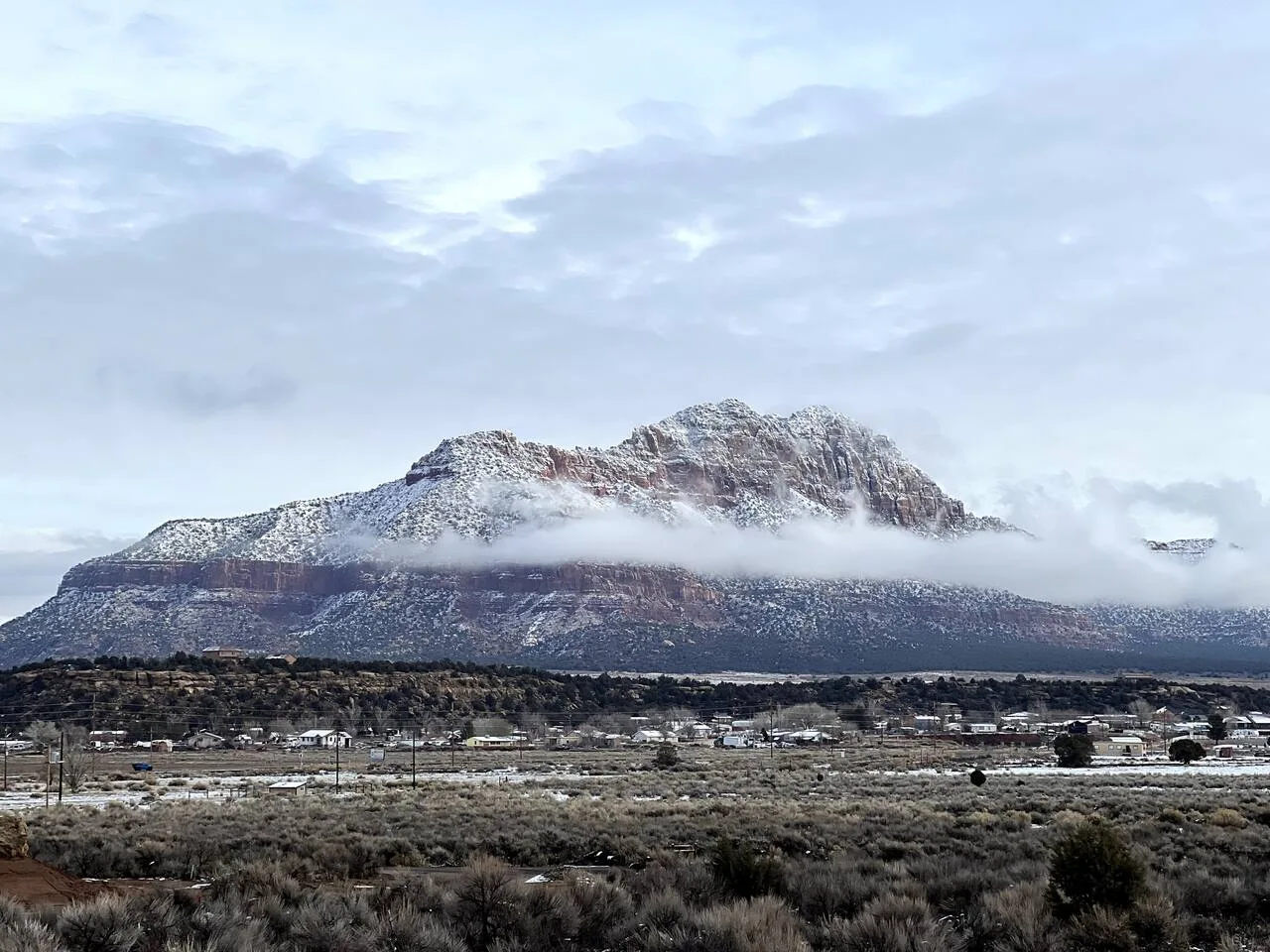
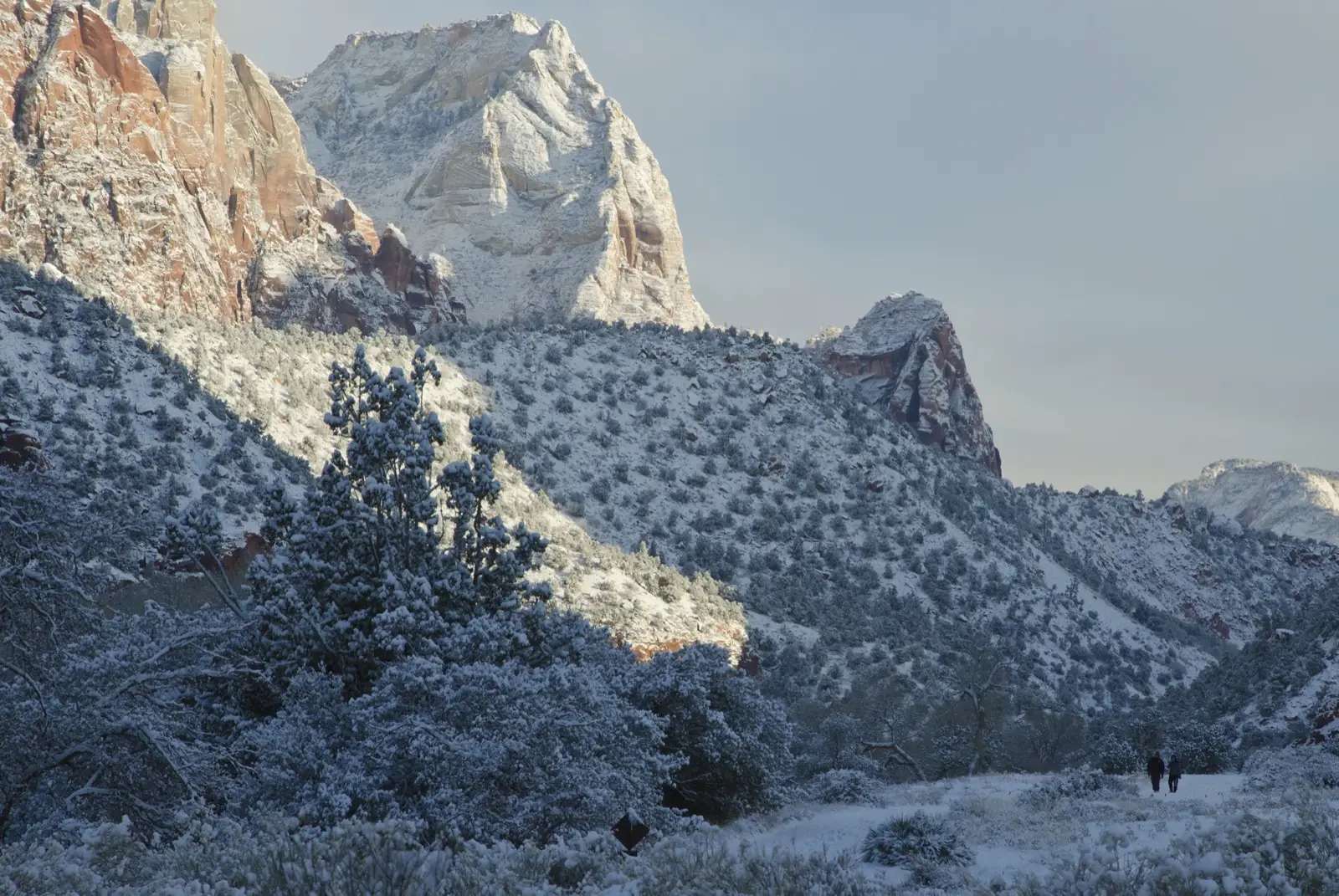
- Snow on red rock. It happens some winters and not others, but when a storm dusts the Towers of the Virgin and the sun comes out the next morning, it’s one of the finest sights in the Southwest. The snow usually melts off the canyon floor within a day or two, so go right away.
- Your own car on the Scenic Drive. Outside the holiday shuttle window you can drive up canyon, pull over for photos and go back for a jacket without waiting for a bus.
- Easier lodging. Demand drops after Thanksgiving, so it’s easier to find the cabin you want without booking months ahead. Holiday weeks are the exception.
- Comfortable hiking temperatures. A 55-degree day is ideal for climbing to an overlook. Try that in July.
If you’re still choosing your season, our guide to the best time to visit Zion compares every month side by side.
The best winter hikes in Zion
Stick to shorter, well-traveled trails and save the long, exposed routes for drier months. These four work well in winter, with a note on where ice tends to collect.
Pa’rus Trail
The Pa’rus Trail is a paved path that follows the Virgin River for about 3.5 miles from end to end, between the visitor center and Canyon Junction. It runs through the wider, sunnier part of the canyon, so it tends to thaw sooner than trails up canyon. It’s also the only trail in Zion where leashed dogs are allowed, which makes it a good first walk for everyone.
Riverside Walk
The Riverside Walk is about 2.2 miles round trip on a paved path from the Temple of Sinawava, at the end of the Scenic Drive. It’s flat and easy, but it sits deep in the canyon and gets very little sun in winter, so expect ice in places. Microspikes help a lot here. If you’re thinking about walking into The Narrows beyond it, that’s only for people with drysuits and proper gear, and the park closes it when the river runs above 150 cfs.
Watchman Trail
The Watchman Trail starts at the visitor center and climbs to a viewpoint over Springdale and the lower canyon, about 3.3 miles round trip and roughly two hours. It’s a good half-day option when the upper canyon is icy. Since it starts at the visitor center, you don’t need the Scenic Drive or the shuttle.
Canyon Overlook Trail
The Canyon Overlook Trail is a short walk, about a mile round trip, just east of the Zion–Mount Carmel Tunnel. It ends at a big view down into lower Zion Canyon. Parts of it run along shaded ledges with handrails, and those ledges can be icy on winter mornings, so wear traction and take your time. Parking is very limited.
A note on bigger hikes: Angels Landing requires a permit past Scout Lookout, and the lottery for December through February runs October 1–20, with results on the 25th. Even with a permit, ice on the upper route is a real reason to turn around.
Cold nights in Apple Valley: an honest note
Our cabins sit in Apple Valley at about 4,960 feet, higher than Springdale (about 4,000 feet) and roughly 1,700 feet above Hurricane. That means our nights are colder than the Springdale averages above. Expect hard frosts on most winter nights, with lows that often dip into the 20s.
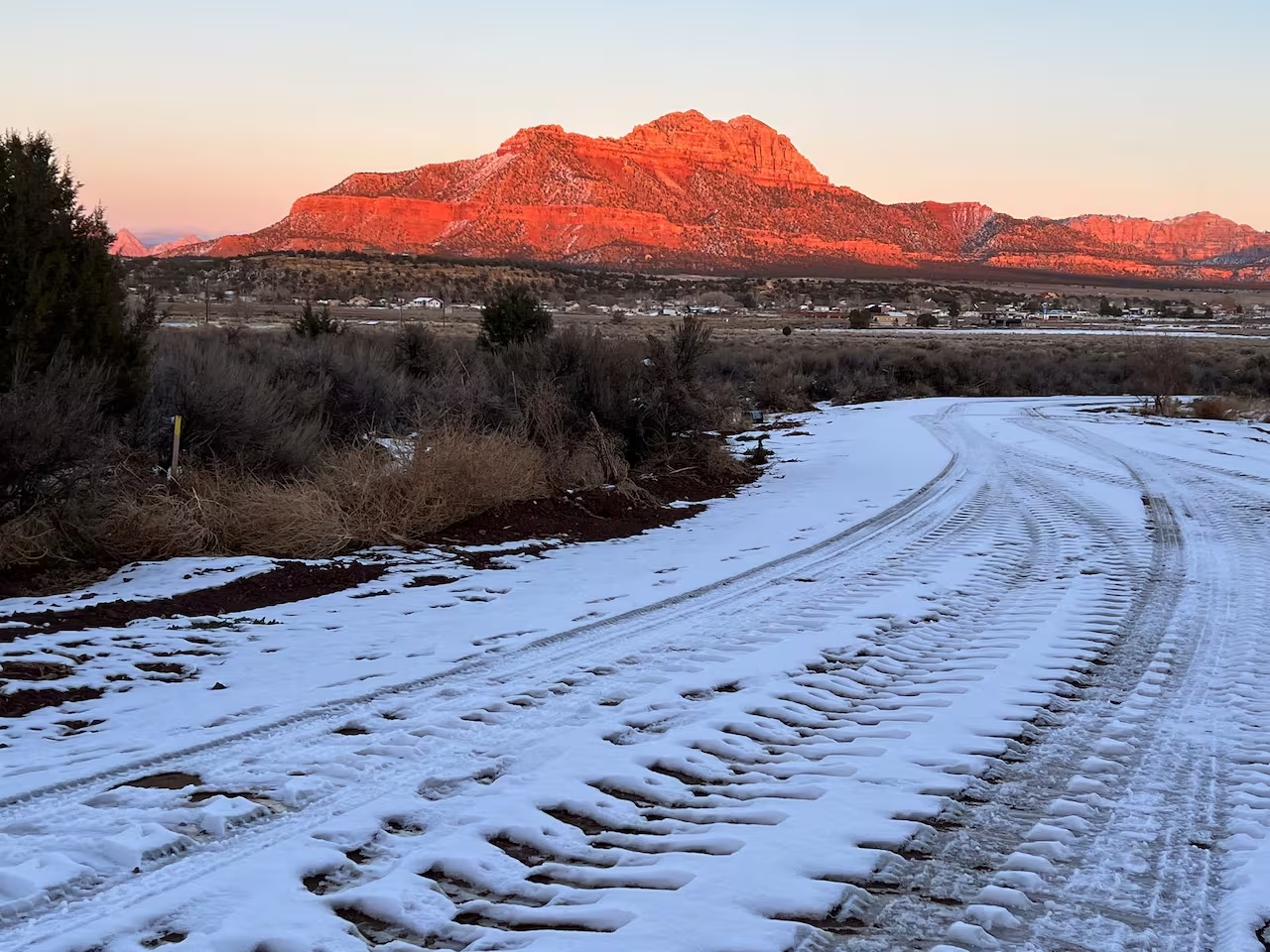
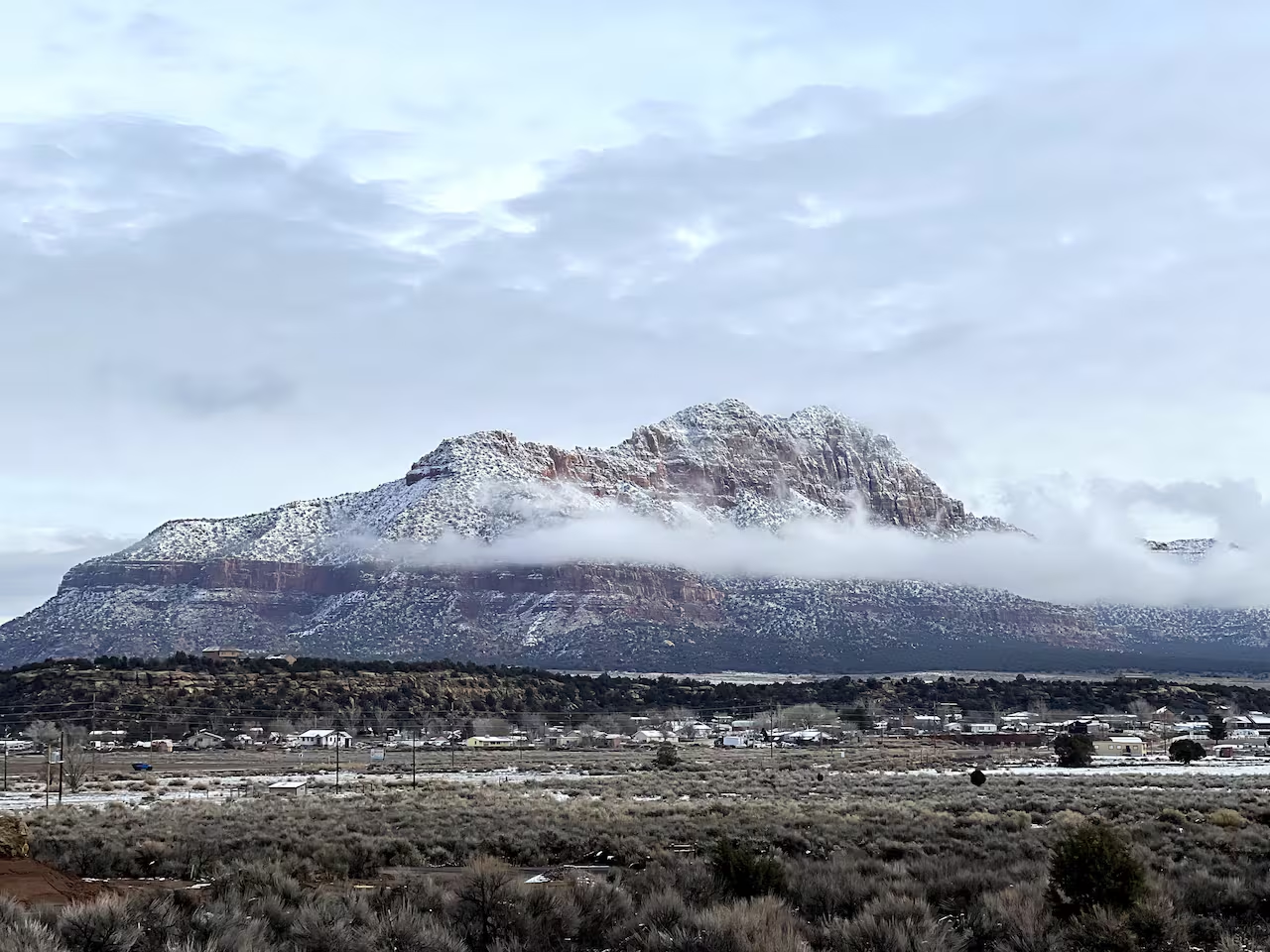
Snow at the cabins happens some winters, usually a light coating that’s gone by afternoon. It isn’t something to count on. The final stretch to the property is a maintained gravel road that any standard car can handle in normal conditions; after a rare snowfall, just take it slow.
The cold has an upside. Clear, dry winter air and long nights make for some of the best stargazing of the year, and the sky over Apple Valley is very dark. It’s fully dark by early evening, so you don’t have to stay up late to see Orion, the Pleiades and the fainter winter band of the Milky Way.
Why a hot tub cabin makes sense in winter
After a day of walking icy trails in a cold canyon, the evening is when you notice where you’re staying. A hotel room with a heater is fine. A soak under the stars with frost on the junipers is better.
Here’s how our four cabins work in winter:
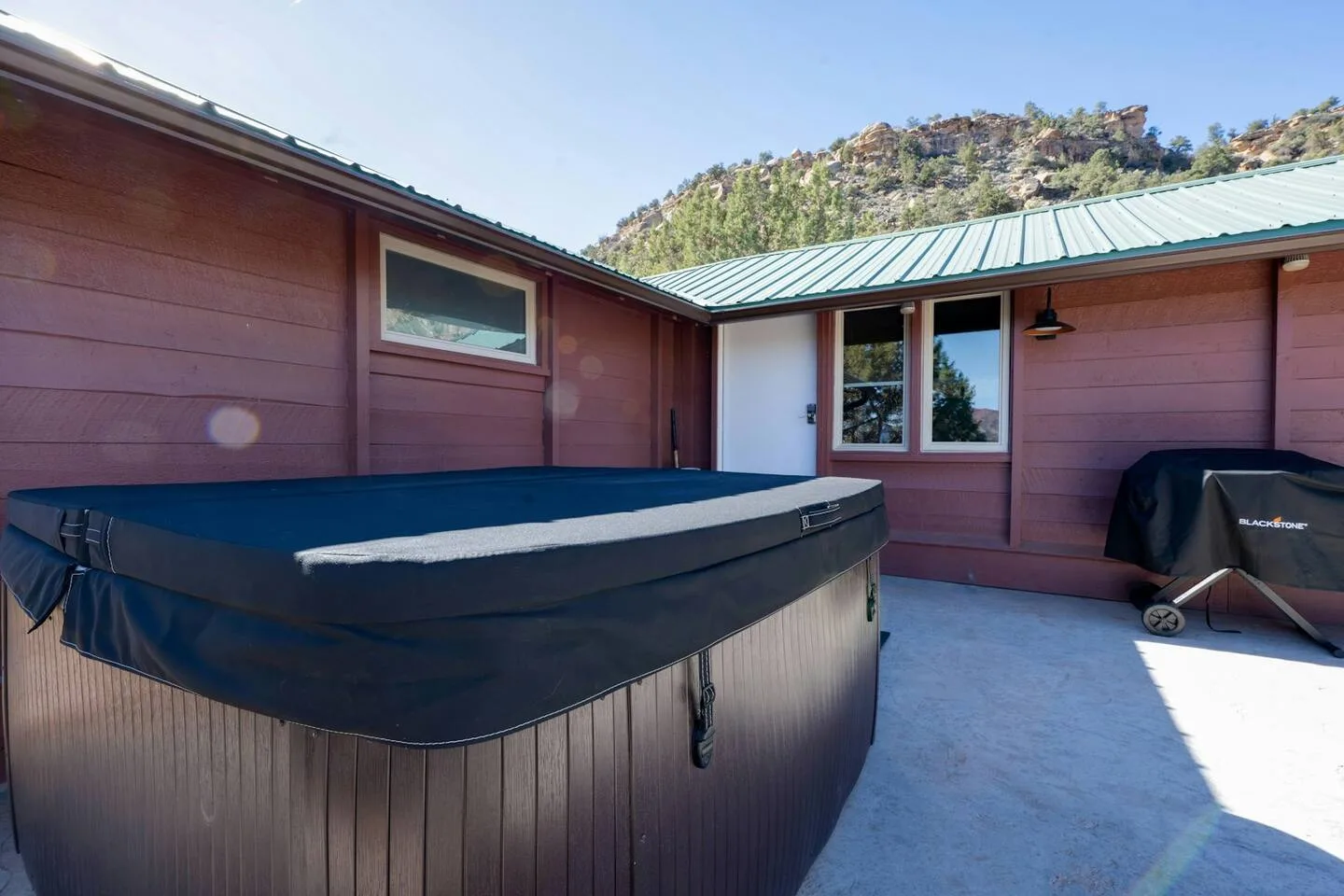
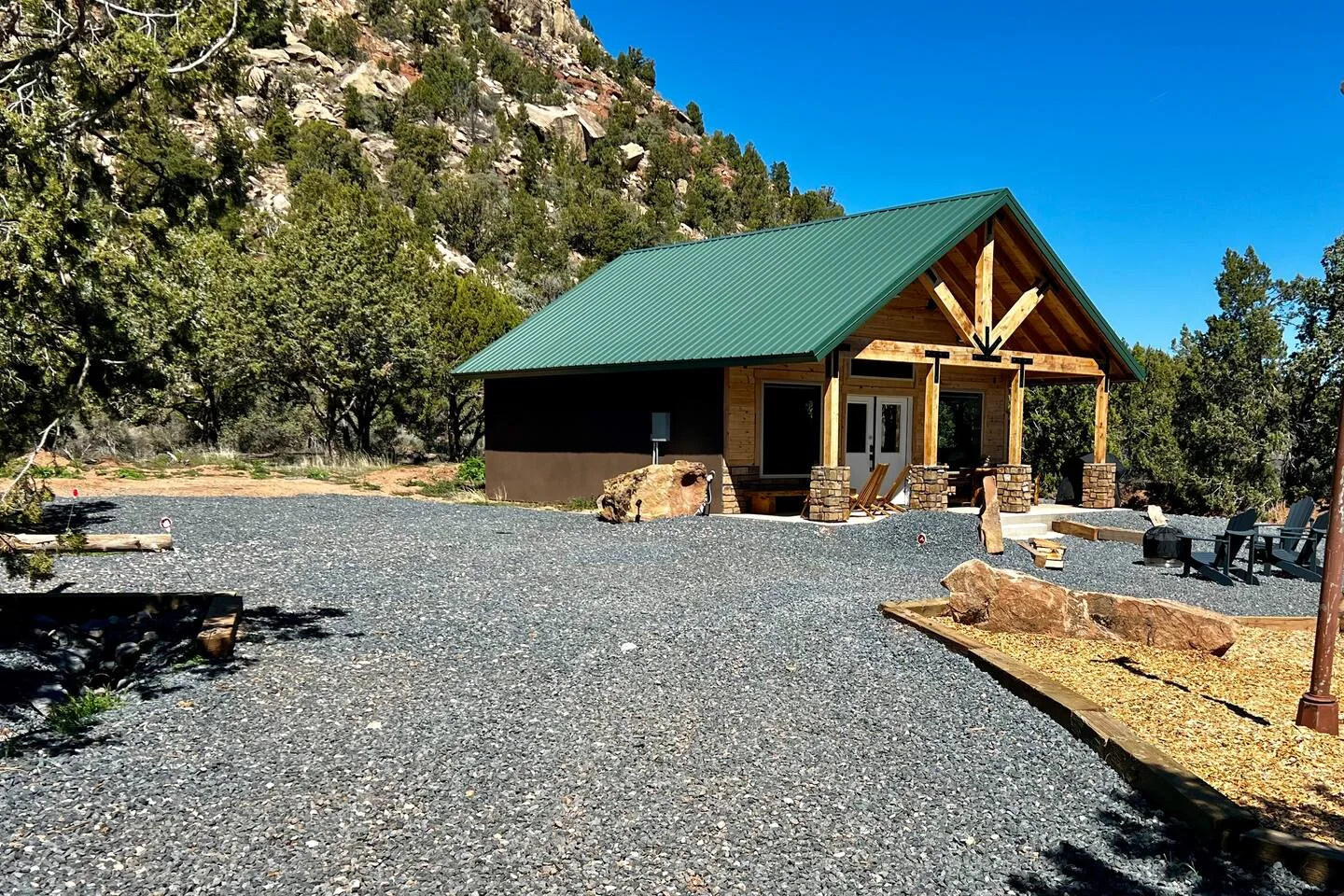
- Anasazi Cabin is the only one with its own private hot tub, on its own patio, plus a private fire pit. It’s single-level and has two AC/heat units, which keeps it warm on cold nights. It’s the one we’d pick for a winter couple’s trip.
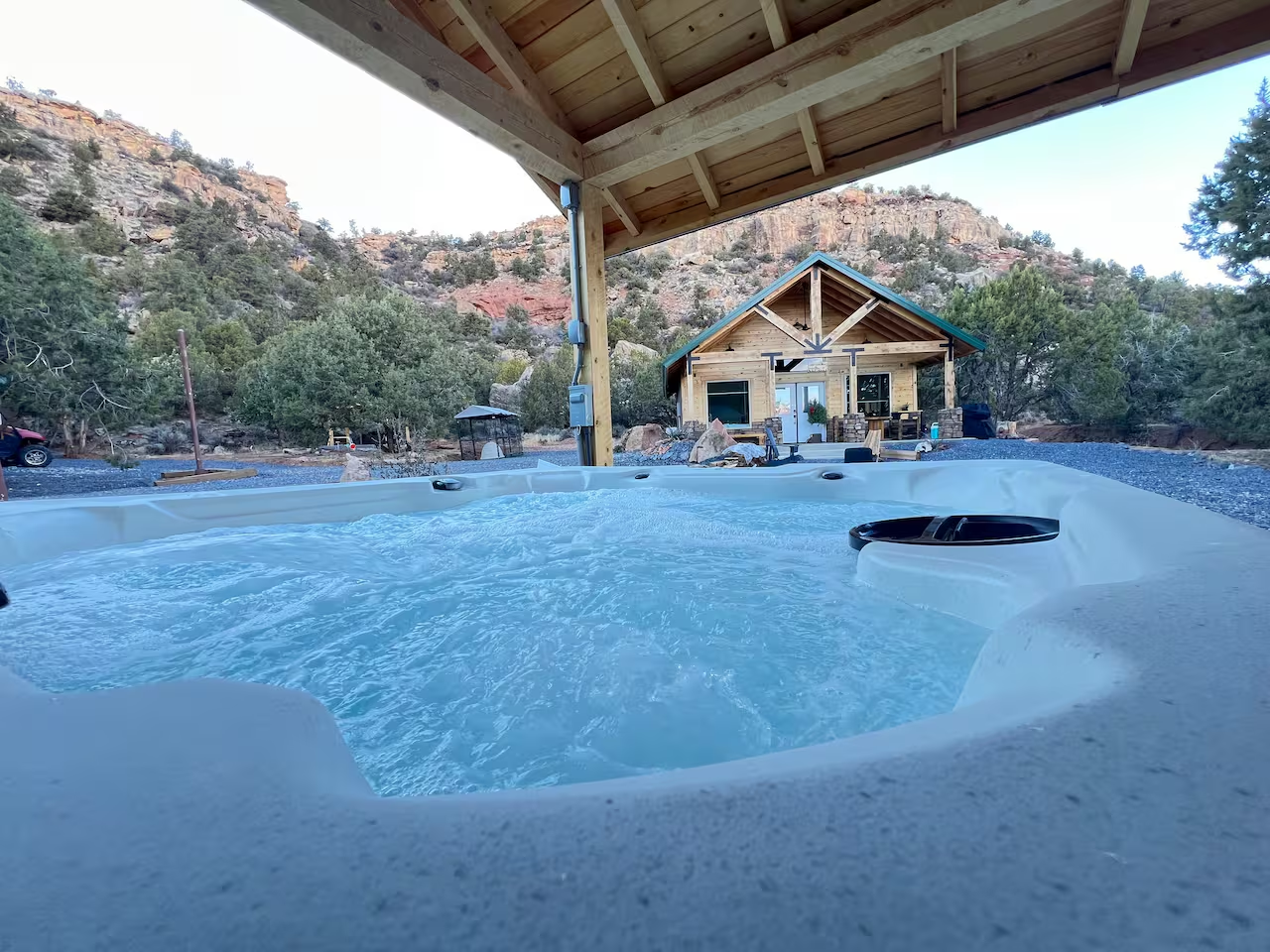
- Zion’s Gateway Cabin shares a hot tub under a covered pavilion just across the yard, which is the snowy tub in the photo at the top of this post. The roof keeps snow and wind off while you soak.
- Little Creek Mesa Cabin and Zion Ranger Cabin also share hot tub access, so every guest can warm up at the end of the day.
Every cabin also has a fire pit with free firewood, which on a winter night is less a nice extra and more the main event. Bring warm hats, a robe or a heavy jacket for the walk to the tub, and some sandals that are easy to slip on.
For couples, our two-night romantic getaway plan lays out how to spend a weekend around Anasazi Cabin’s private hot tub.
Winter packing list for Zion
- Microspikes or other slip-on traction devices
- Waterproof hiking shoes and warm socks
- A warm base layer, fleece, insulated jacket and wind shell
- Hat, gloves and a buff for mornings and evenings
- Headlamp, since you’ll likely drive home after dark
- Thermos for hot coffee or cocoa on the trail
- Swimsuit and a warm robe or jacket for the hot tub
Our take
Zion in winter rewards people who plan a little. Check the shuttle and road status, bring traction, start hikes by late morning and keep your days a bit shorter. In return you get quiet trails, your own car on the Scenic Drive in most weeks, and maybe snow on the red cliffs. Then come back to a fire and a hot tub. If that sounds like your kind of trip, check winter availability and book direct.
Frequently asked questions
Is Zion worth visiting in winter?
Is the Zion shuttle running in winter?
Do you need crampons or microspikes in Zion in winter?
How cold is Zion in December and January?
Does it snow in Zion National Park?
About the authors
This guide comes from the team at Anasazi Cliffs Lodging, four private desert cabins in Apple Valley, Utah, run by local hosts Robert and Maria. We help guests plan Zion, Gooseberry Mesa and Southern Utah days every week, and we update these guides when rules and conditions change.